

A Simple Fuel Cell
According to Gas 2.0, Ford, Mercedes Benz and Nissan have decided to pool their resources to bring affordable fuel cell vehicles to market as soon as possible. Most of us have no idea what a fuel cell is or why we would want a car powered by one. So let’s make it simple. A fuel cell combines hydrogen with air to create electricity.The only “waste product” is water vapor. Pretty cool, huh? Here’s an article about fuel cells at WikiPedia, if you want to know more about the technology.
Some of you may know that there were electric cars before the gasoline engine was invented. Today, Nissan offers an all electric vehicle called the LEAF. But electric cars from yesterday and today have the same drawbacks – heavy batteries and a short driving range. And when the batteries are fully discharged, it takes forever to recharge them.
A fuel cell car generates its own electricity, so it doesn’t need a heavy storage battery. It can go 300 miles or more on one tank of hydrogen. And fill ups should require about the same time as it takes to fill the gas tank in a conventional car.

Cutaway view of Honda Clarity
If you live in California, Honda will lease you a fuel cell powered car for $600 a month. Why is the price so high? Because fuel cell technology today is about where computer technology was in 1977 when the Apple II computer first appeared. Translating fuel cell theory into real world products will take time and money. Lots of money. By joining forces, Ford, Mercedes and Nissan hope to beat the competition without going broke along the way.
You may have heard that there is no free lunch and that’s true when it comes to fuel cells. Yes, in operation, a fuel cell car has zero emissions. But the hydrogen has to come from somewhere. You just don’t find it lying about in nature. Chemically speaking, hydrogen bonds aggressively with lots of other elements, especially oxygen.

Water Molecules
When hydrogen and oxygen embrace each other, we get water. But to pry hydrogen atoms loose from water takes energy. Lots and lots of energy. At the moment, the process usually involves electricity. And electricity comes from electrical generating plants, the same facilities that spew millions of tons of pollutants into the air every year. So to say a fuel cell powered car has zero emissions is a bit misleading.
Let’s not lose hope, though. The folks at Gizmag.com have reported recently on several breakthroughs in the laboratory that may yield abundant hydrogen supplies at low cost. One is a new catalyst discovered at Princeton and Rutgers through computer modeling. The other, from Cambridge University in England, uses cobalt as a catalyst. Researchers at the University of Buffalo are exploring the use of nanoparticles in hydrogen production. All three of these breakthroughs were announced just last month. Who knows how far science and industry will have advanced fuel cell technology in 5 years? Or even a year from now?
 I write a lot about cars and transportation. But the hydrogen economy is an exciting development in all areas of human endeavor. Fuel cells could power every building on Earth, from homes to factories, offices and schools. Imagine a world without massive electric generating plants and the pollution they create, without phone poles and wires, and without power outages from weather or terrorist activities. Hydrogen power could change our future. And not a moment too soon.
 And that’s a good thing! Today’s automotive world is obsessed with hybrids, plug-in hybrids and electric cars. All of them have one glaring weakness – the batteries they need to work are heavy and expensive. They also contain lithium, a highly toxic substance that is dangerous to work with both in the manufacturing and in the disposal process. Last but not least, hybrids with batteries typically operate in the 300 volt range, which poses a potential danger to occupants and rescue workers.
 Like all hybrids, the Peugeot system uses a conventional internal combustion engine. The motor sometimes powers the drive train and sometimes operates a compressor. The system also recaptures some of the kinetic energy of the car under braking. Pressurized air is then stored in an onboard cylinder. At speeds above 40 mph, the engine does all the work. At lower speeds, the compressed air helps propel the car forward. And at low speeds, the car moves entirely by the power of compressed air.
 m so smart, I scare myself. Recently, I boldly predicted that all the world’s energy needs can and should be met by solar power. And now, just a few days later, the World Wildlife Fund has released a
  Son of gun. Those crafty folks in Belgium are taking my water tower idea and making it horizontal. They propose to build an


 Then along came James Watt, who gave us the steam engine to do our work for us. Life was good. The discovery of petroleum spurred machines called automobiles and airplanes. Electricity became our friend, allowing us to do virtually anything with the touch of a button. Life was very good, indeed.
 Just last week,
  Other methods include using the extra power during the day to pump water uphill into a storage area. Later, the water is released to turn generators while it runs back downhill. Think Hoover Dam, here. Apple has just filed for a patent on a
  Every once in a while, a race car comes along that not only changes the game, it rips up the rule book and throws it in the trash. Up until 1965, the Indianapolis 500 was dominated by big, bulky, front engine cars. Then Colin Chapman brought his small, light and lithe Lotus 38 mid engine race car to Indy and stood the world of motor racing on its head.
 2 years later, Andy Granitelli brought a turbine powered, 4 wheel drive car to Indianapolis. Parnelli Jones drove it to a commanding lead but the car suffered a mechanical failure just 3 laps from the end of the race. The race sanctioning body quickly banned turbine engines and four wheel drive. The car never raced again.
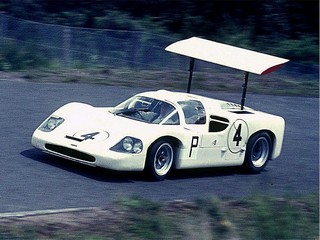 Also in the 60’s, a Texan named Jim Hall pioneered innovations in aerodynamics that continue to influence motor racing even today. Perhaps the most outrageous of his creations was the Chapparal 2F, which featured a wing as big as a billboard. Whether you love or hate the modern emphasis on “aero” in racing, it’s all Jim Hall’s fault. In the past 50 years, though, race car technology has followed a path of evolution, not revolution.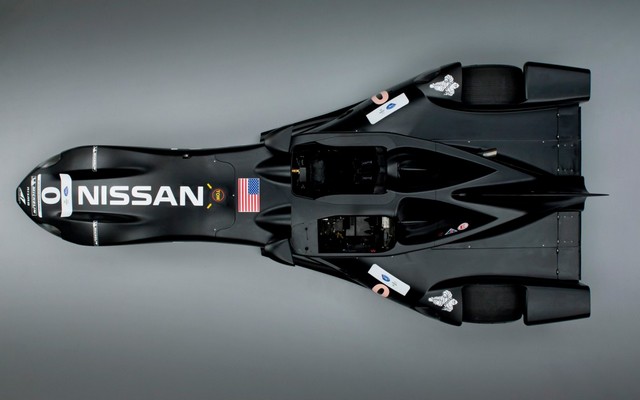

 Few people bother to do all this legwork. They only focus on the sticker price and the monthly payment and figure that’s the whole story. They would be shocked to find that repairs, depreciation, fuel, taxes and insurance often amount to more than their monthly payment.
 There is another factor in the equation for hybrids, plug-in hybrids and electric cars and that is the cost of replacing the battery at the end of its service life. That alone can add $4000 to $8000 dollars to your cost of ownership. Right now, no one really knows how long those batteries will last. That unknown may be what is driving down the resale value of these cars, as buyers shopping for a used model don’t want to get stuck with that expense and who can blame them?
 I just took my Honda Civic on a road trip this past weekend and got 38 mpg. The Civic has one of the highest resale values in the market and some of the lowest maintenance costs. And it looks good, too!
 When gasoline prices in America first hit $4.00 per gallon, consumers suddenly started demanding more fuel efficient cars. Gas guzzlers like the Hummer disappeared overnight. Sales of full size trucks and SUV’s plummeted. Manufacturers were desperate to build more fuel efficient products that would bring buyers back into showrooms.
 Electric cars are nothing new. They were around before the gasoline engine was invented. In fact, the very first Porsche, built in 1898, was an



 Rhode Trips